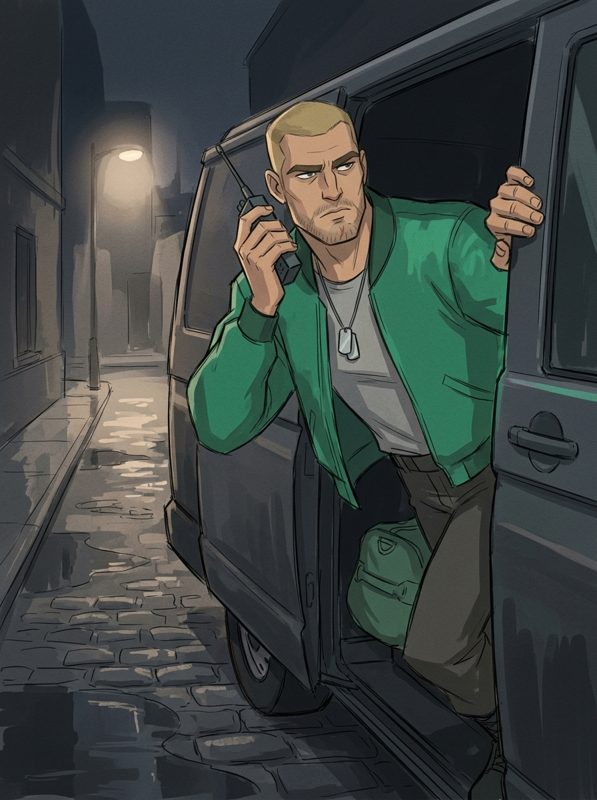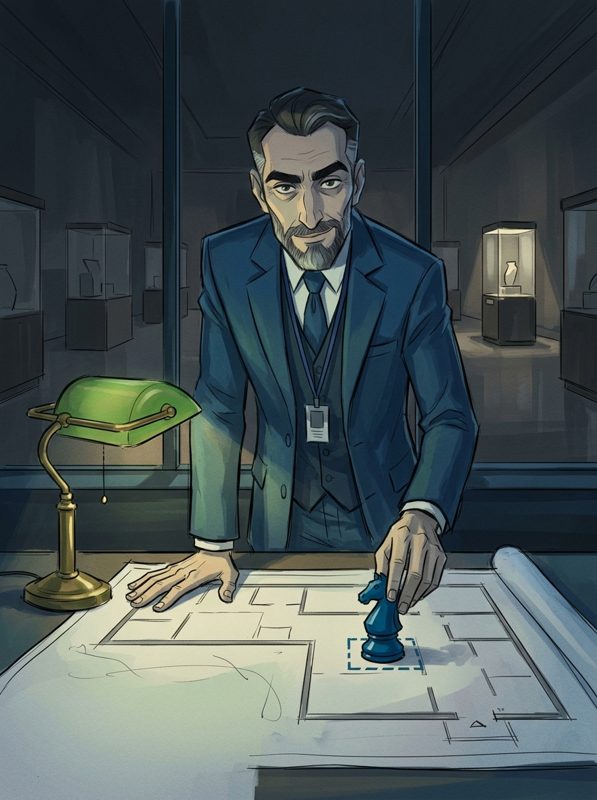
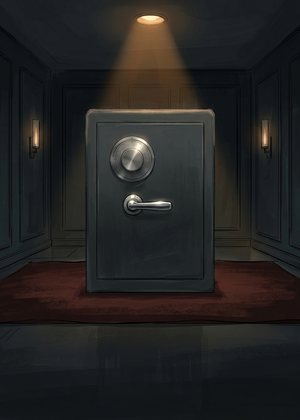

The job was clean. The split wasn't.
Six specialists pulled off a heist as one crew. Back at the safehouse they celebrated and put the loot in the safe; each of them keyed in one digit of its six-digit code alone while the others waited outside. In the morning the safe was open and the loot was gone. Every door and window was still locked, so the thief and the loot are still in the house.
Nobody is going to confess, so you will have to work it out. You question the others, you watch what they can and cannot show you, and you name the thief before anyone else does.
The crew:
- Selim, the Brain
- Rafael, the Merchant
- Adriana, the Cat
- Céleste, the Alchemist
- Lena, the Ghost
- Marcus, the Captain
How a game works
There are 21 cards: 6 crew, 6 methods and 9 locations. At the start, one card of each kind goes into the stash unseen. Those three cards are the answer. The rest are dealt around the table.
On your turn you roll, tap a location on the board, and the game walks you there by the shortest path. Inside a location you interrogate: you name a crew member and a method, and the location you are standing in is the third part of your question.
Going round the table, the first player who holds any of the three cards shows you one of them, in secret. Only you see it. Each card you see is one the stash cannot hold.
When you are sure, you make your accusation, once per game, from inside any location. Right, and you win. Wrong, and you are out, though you still show cards to the players who are left.
The full rules are in NoHonor 101: How to Play.
What we kept from the classic
We kept what makes the mansion-mystery format work: three hidden cards, private answers, and one accusation that can win or end your game. Six crew, six methods and nine locations give the same 324 possible answers as the classic box.
We changed the story. Cluedo asks who committed a murder; NoHonor asks who double-crossed the crew. Same deduction, a different crime.
What we built for playing online
- No setup. Nothing to shuffle, deal or put away. A game starts in seconds.
- Tap to move. You pick where you want to go, not which squares to count. The game shows the path and where you will stop.
- A notes sheet that keeps up. The notes assistant can record every card you have been shown. Turn it off if you would rather keep the book yourself.
- A case log. Every interrogation, every shown card and every accusation, in one scrollable list.
- Bots that don't cheat. Add bots on Easy, Normal or Hard to fill a table, or play against them alone.
- Turn timers. 45 seconds by default, so nobody waits on a player who went to make tea.
- Play on your phone too. The whole game runs in your phone's browser, and just as well on a laptop.
Four ways to play
- Play online: join a public table with other players. If not enough people turn up within a minute, bots take the empty seats.
- With friends: open a private room and share its code or link. Three to six seats; a two-player mode is coming soon.
- Vs bots: a full game on your own, at the difficulty you pick.
- Learn by playing: a real game against two easy bots, with a coach that explains each step. It takes about ten minutes.
NoHonor is free. You need a free account to play, solo games included; it costs nothing.
Who made it
NoHonor is made by a small team of four. We wanted the deduction game we grew up with, playable on a phone with friends in a few minutes, without a box to set up. We will write here about how the game works, how to win it, and why it looks the way it does.