The problem with counting
At a table, moving a pawn is easy. You count with a finger, change your mind, count again. Nobody minds.
On a phone, the same move means tapping one small square after another, on a board you have probably zoomed into, with a turn timer running. A slip of the thumb sends you down the wrong corridor. Movement would become the hardest part of the game, and movement is not what the game is about.
The interesting decisions in a deduction game are where to go and what to ask. The route between them is a chore. So we handed the chore to the game.
How it works
- Roll. Two dice; the total is how far you can go.
- Every reachable square lights up. You can see at a glance where this roll can take you.
- Tap any location, near or far. Every location on the board is a target, even one you cannot reach this turn.
- See the path. The game draws the shortest route and marks the square where you will stop.
- Confirm. You move as far as the roll allows along that path. If it reaches the door, you are in. You do not need an exact roll.
- Undo once. Changed your mind? You get one undo per turn.
The rules underneath are the familiar ones: you move up to your roll, never diagonally. The interface just does the counting.
Why far locations are targets too
Letting you tap only the locations within this roll's reach would look tidy, but it would take away a real decision: heading for a location two turns away.
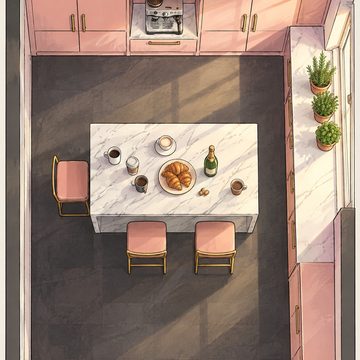
Now you can tap the far kitchen, and the game moves you as far toward it as your roll allows. Next turn you tap it again. Planning a route over several turns stays your decision; only the counting goes away.
What we kept
We kept the dice. Without them, everyone reaches every location at will and the board stops mattering. The dice keep the race: the frustration of rolling a 3 when the location you need is 8 squares away is part of the game.
We kept the secret passages, too. Start your turn in one of the four corners and you can skip the roll and cross to the opposite corner.
What we may add
Some groups would rather skip the board altogether and move straight from location to location. We have it on the list as an optional lobby setting for a later version. It will be a choice for the host, never the only way to play.
Small details that matter
- Targets are big. Every tap target is at least 44 points across on a phone, the size of a fingertip.
- You can zoom and recentre. Pinch to zoom, and one button centres the board on your pawn.
- The path stays visible until you confirm, so you can check it against the board before committing.
More from behind the scenes: Play NoHonor on Your Phone.