1. The Drag
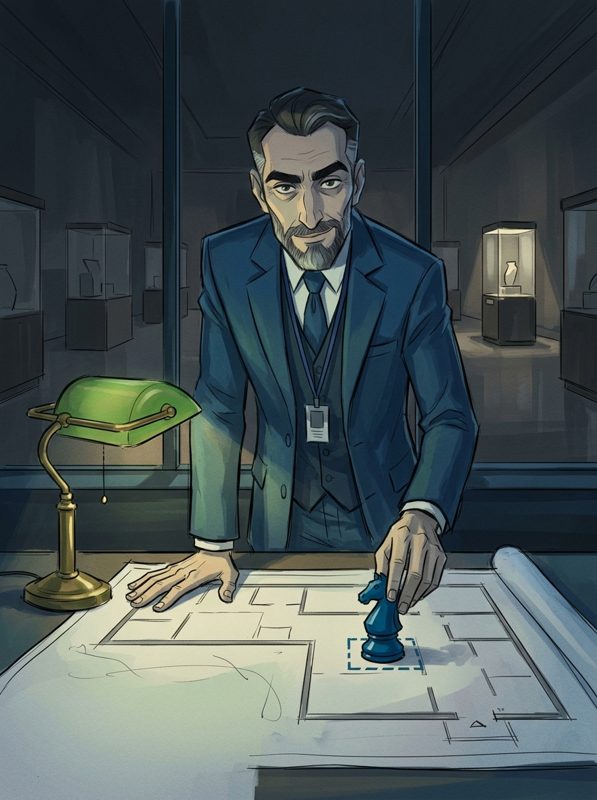
When you name a crew member in a question, their pawn is moved into your location. Most players treat that as a side effect. The Drag treats it as the point.
Watch where your rivals are heading. When the player who is closest to the answer is two squares from the location they need, name their crew member in your next question. They are pulled across the house into your location, and their careful route is gone.
When it works best: late in the game, against the one player who is clearly close. Also against anyone about to reach a corner, where a secret passage would carry them across the board.
The catch: your question should still be useful. Name the rival's crew member alongside a method and location you actually want to learn about. And remember that you have just put them inside a location, which may be exactly where they wanted to be. CHECK · confirm whether a pawn moved by someone else's question may interrogate on its next turn without moving.
2. The False Trail
Every question you ask is public. Everyone sees what you named and who answered. Sharp players use that to read what you are hunting.
The False Trail feeds them a wrong story. Pick a card from your own hand, say the drill kit, and name it in question after question. Nobody can ever show it to you, because you hold it. To a watcher it looks like you keep asking about the drill kit and nobody has it. Some will start to believe it is in the stash.
When it works best: against players who keep their own book and read the table, and when your questions can still be useful in the other two parts. With the drill kit locked in, any card shown to you is one of the other two. You lose nothing.
The catch: players who are paying close attention will notice that you never accuse on it. Use it for a few turns, then stop.
3. The Stonewall
When your hand matches a question, you must show a card. But if you hold more than one of the three, you choose which one.
The Stonewall: whenever a rival's question includes a card you have already shown them, show that card again. Showed Selim the garage on turn four? Show him the garage again on turn nine, and again on turn fourteen. Each time he asks, he spends a turn and learns nothing new.
A stronger version: show each rival the card they are most likely to have seen already, from you or anyone else. Keep your other cards hidden for as long as the rules let you.
When it works best: all game long. It costs you nothing, and against a player who asks the same combinations often, it can stall them for several turns.
The catch: there isn't one, which is why it makes people so cross. You have 15 seconds to pick, so decide while the question is still going round the table.
Play mean, play fair
All three tactics are part of the game. Making enemies at the table is fine; making them away from it isn't. The four reactions are there for a well-timed grin when your Drag lands, not for gloating.
If you would rather win friends, read NoHonor Strategies instead.